What to know first
- Start with the official records office.
- Check the signer and certification, not only the document title.
- Keep authentication pages attached to the record.
Request the record from its official issuer
The CDC’s vital-record guidance directs applicants to the state or area where the event occurred. The federal government does not maintain a nationwide file from which it issues these state vital records.
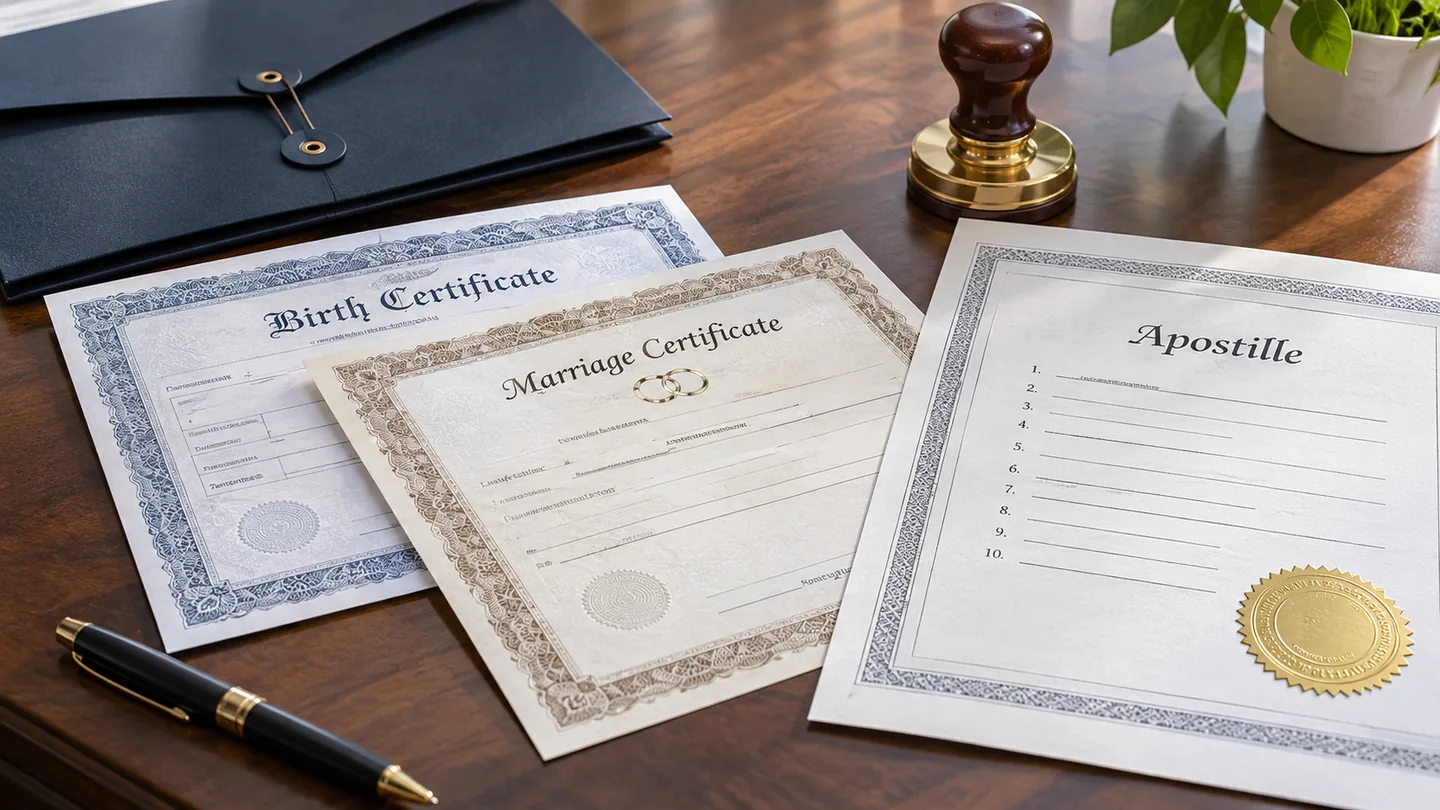
An official certified copy is different from a home photocopy, scan or decorative certificate. If you need a replacement, explain the intended overseas use to the records office and check the state authentication requirements before placing the order. Keep the order confirmation and identify exactly which office will certify the record.
Check the signature and certification
The official who signs the record can affect its preparation. California’s guidance, for example, distinguishes signatures it can apostille directly from certain records that may need prior clerk certification or a different certified copy. Other states publish their own requirements.
Do not assume that adding a notary stamp to a photocopy will make it equivalent to an official vital record. Share a clear review copy, including the certification and signature area, before arranging processing. The state that issued the record is the starting point even if you now live elsewhere.
Ask the overseas recipient what it needs
Authentication and the recipient’s application requirements are separate questions. A properly authenticated document may still be the wrong version for a particular procedure. Request the checklist for your actual application.
- Which certificate or record format is required?
- Must it have been issued within a particular period?
- Is a translation required, and in which language?
- Must names match a passport or another supporting record?
- Does the recipient need the physical document or an electronic submission?
Keep the document set intact
Once certification is attached, keep the original record and its authentication together. Avoid removing attached pages to scan or photocopy them. Make a list of the documents being sent and retain reference copies before shipping.
Where several family members or different states are involved, label each record clearly. Each document needs its own origin and destination review; one family application does not make every certificate follow the same authority.
Get help preparing your civil records
Tell Authxperts the issuing state or country, document type and destination. Include the recipient’s instructions so we can review the appropriate apostille or legalization route and any translation questions before you send originals.
Official sources
Sources reviewed November 2, 2026. Check the issuing authority’s current instructions before submitting documents.
This article provides general document-preparation information. Requirements depend on the document, applicable rules and receiving organization. Ask for a document-specific review before arranging notarization, authentication or shipping.