What to know first
- Origin and destination determine the route.
- An apostille does not certify document contents.
- Check the document category before arranging legalization.
What an apostille does
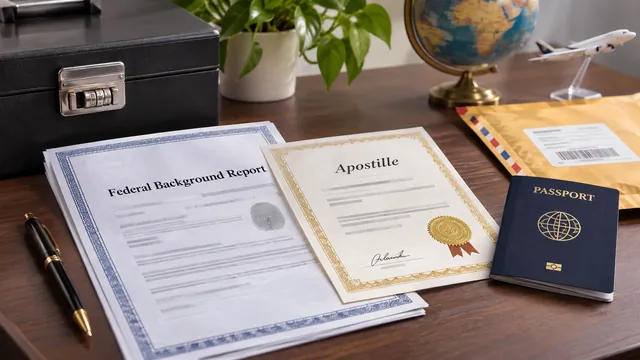
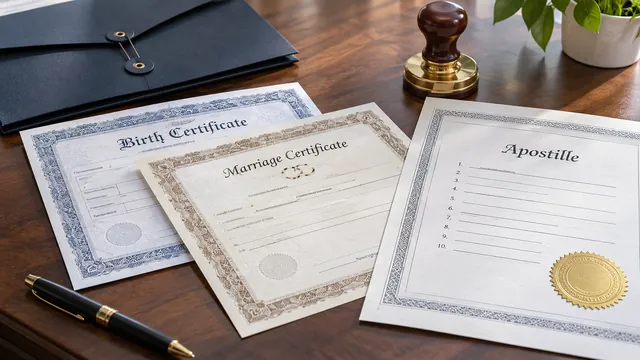
An apostille certifies the origin of a public document: the relevant signature, the official’s capacity and, where applicable, the seal or stamp. It does not approve the document’s contents or decide whether you qualify for a visa, professional license or other application.
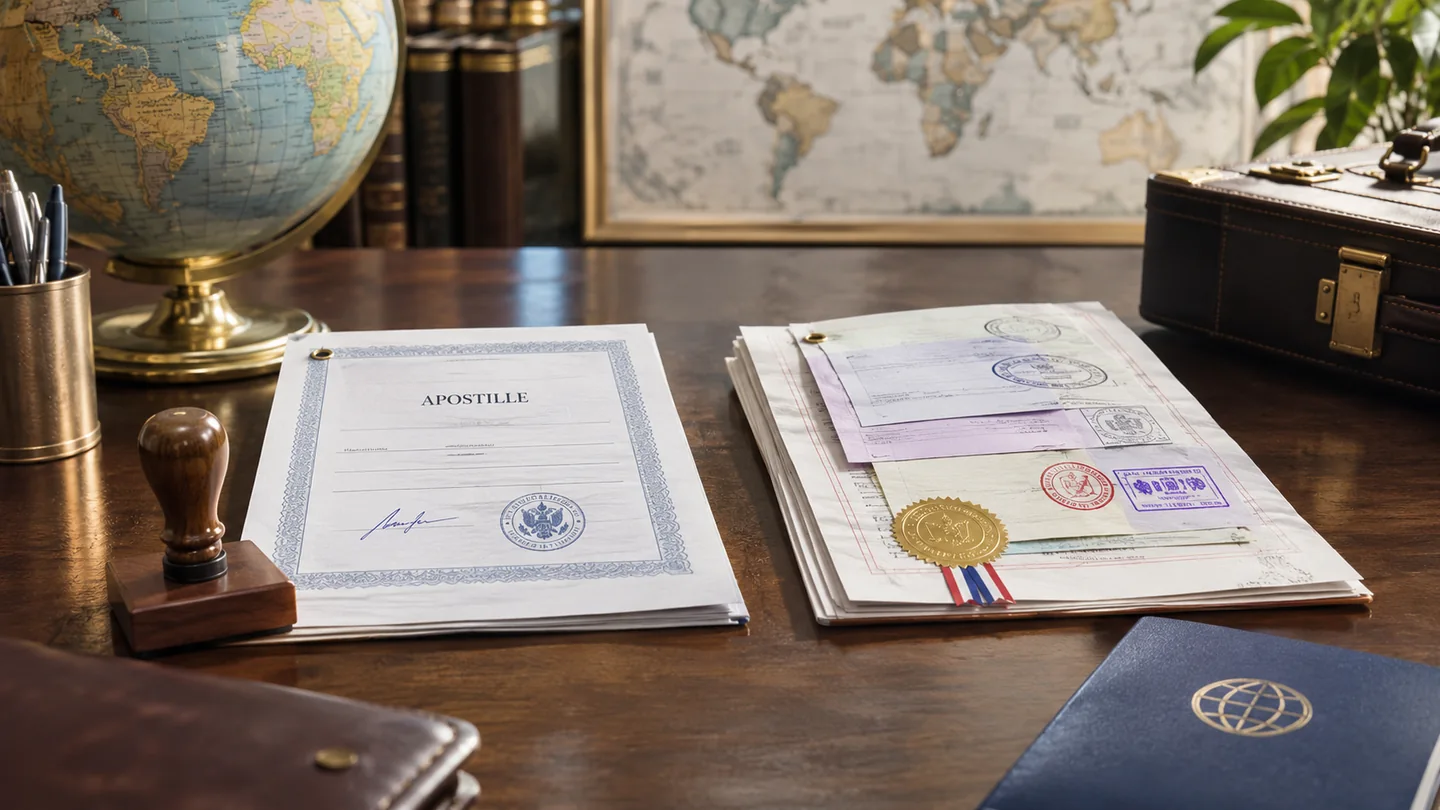
Where the Apostille Convention applies between the document’s origin and destination, an apostille replaces the traditional legalization chain for documents within its scope. Check the current Convention relationship and any applicable exceptions; a country name on an informal list is not enough.
When embassy legalization enters the process
Documents outside the applicable apostille route may need authentication followed by legalization through the destination country’s embassy or consulate. The exact order depends on the issuing authority, document category and mission’s instructions.
Treat personal records, corporate filings and commercial shipping documents as separate categories. A route supplied for a diploma may not be the route for a certificate of incorporation or invoice. Ask for the current instructions for your actual document.
Find the authority behind the signature
For a U.S. state document, start with the competent authority for that state. Federal documents follow their applicable federal route. Moving to a different state does not change where a birth certificate was issued or where a notary was commissioned.
For documents issued outside the United States, identify the authority in the country of origin before arranging U.S. processing. Authxperts reviews international requests according to both the origin and destination.
Get a useful answer from the recipient
A recipient’s checklist helps identify the document you need, while the competent authority’s rules determine its authentication. Collect both before ordering replacements or mailing originals.
- Name the country and receiving organization.
- Provide the document type, issuing authority and issue date.
- Ask about originals, certified copies, translations and document-age limits.
- Confirm whether a paper document or an eligible electronic version is required.
Start with a document review
Send Authxperts the issuing country or U.S. state, destination and recipient’s instructions. We can review the proposed apostille or legalization route and explain what to submit. Keep your original documents together until the preparation and delivery requirements are confirmed.
Official sources
Sources reviewed November 2, 2026. Check the issuing authority’s current instructions before submitting documents.
This article provides general document-preparation information. Requirements depend on the document, applicable rules and receiving organization. Ask for a document-specific review before arranging notarization, authentication or shipping.